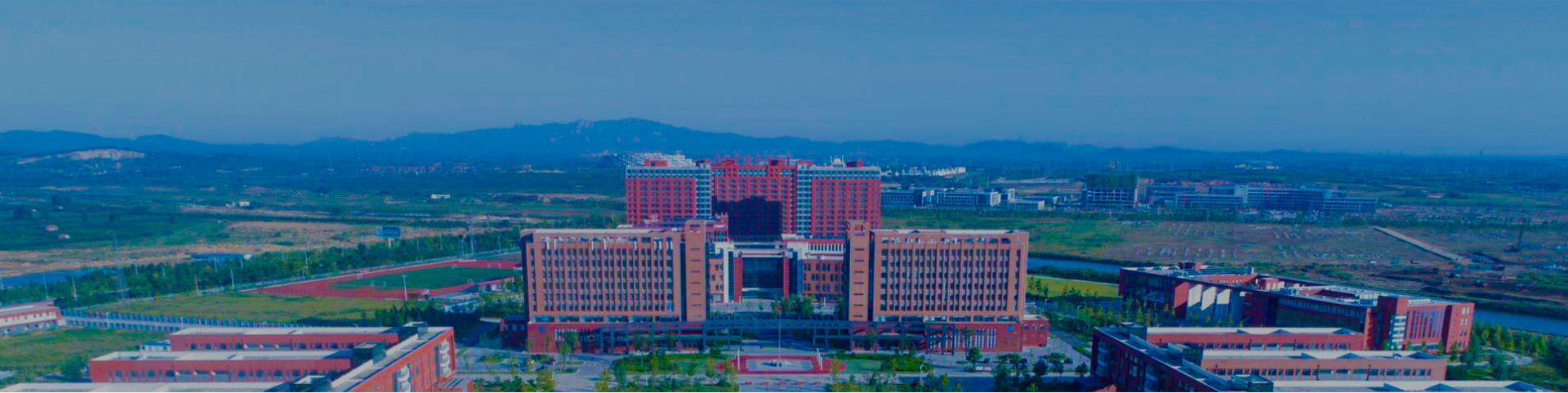
On May 26, a six-person delegation from Shandong Vocational University of Foreign Affairs, led by Executive President Liu Xianyi and Vice President Wang Chuansheng, visited the Weihai Campus. Li Xiangshan, Party Secretary of the Weihai Campus; Han Bing, Dean of Weihai International College; and Bai Yanlei and Xiao Guiping, Vice Deans of the College, attended the symposium. The two sides engaged in discussions on Sino-foreign cooperative education, faculty development, and internationalization.
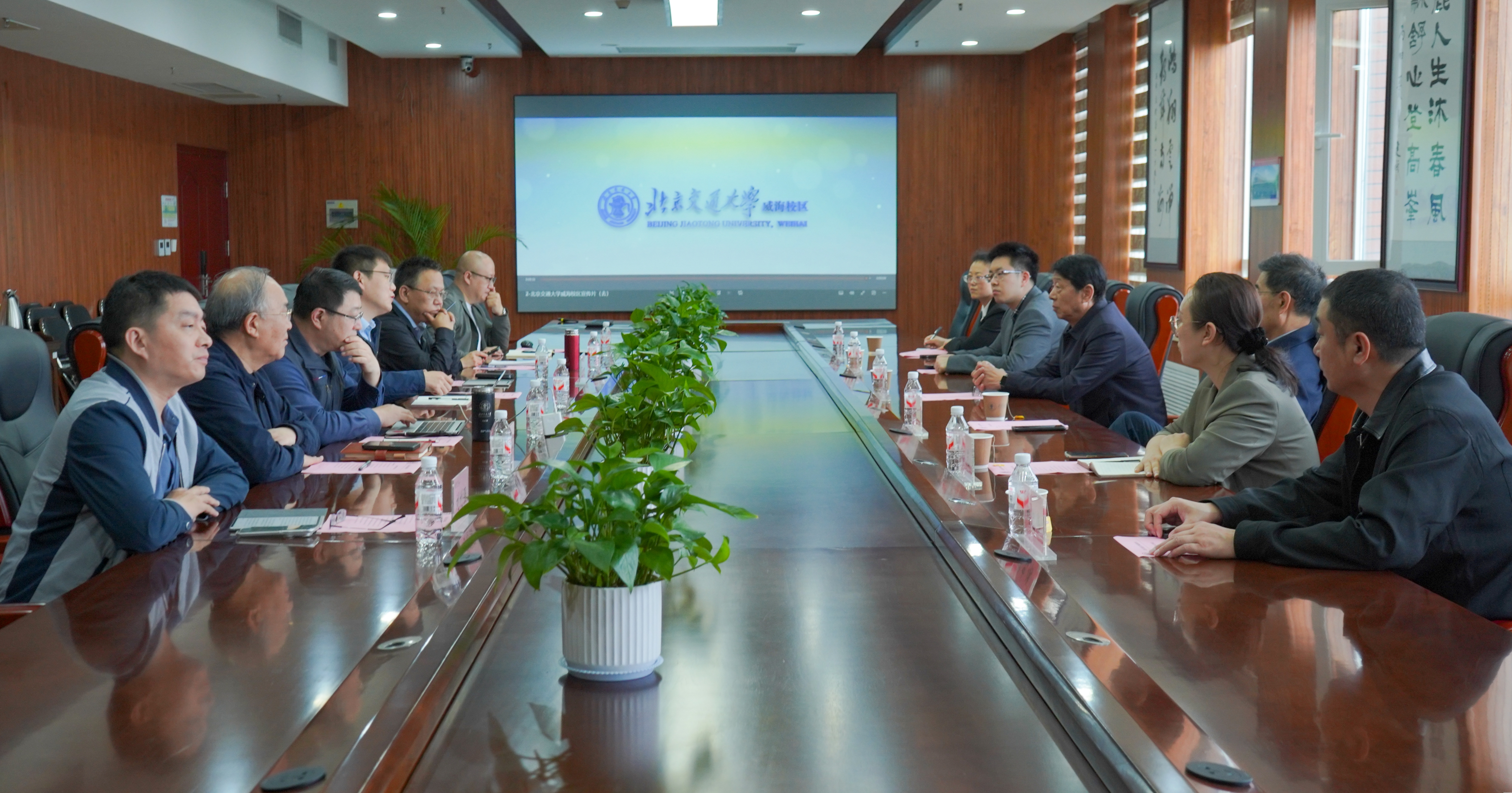
During the meeting, Li Xiangshan extended a warm welcome to the delegation and provided a brief overview of the campus's history, development trajectory, educational positioning, and the defining features of its Sino-foreign cooperative programs. He expressed the hope that the two universities would use this exchange to strengthen communication, learn from each other, and achieve mutual development.
Han Bing detailed the strategic positioning and current operational status of the BJTU Weihai Campus. He pointed out that as a key base for BJTU's Sino-foreign cooperative education, the campus has continuously expanded its scale and enhanced its operational autonomy in recent years. Moving forward, relying on BJTU's advantageous disciplines, the campus will align with the national maritime power strategy and local economic development needs. By leveraging Weihai's regional marine resources, the campus aims to explore development paths for marine disciplines and contribute to local and national socio-economic growth.
Liu Xianyi provided a detailed introduction to the development history, institutional scale, and faculty structure of Shandong Vocational University of Foreign Affairs. He noted that as one of the country's first vocational undergraduate universities, the institution is actively adjusting its discipline layout and establishing several new engineering colleges. He hoped to take this visit as an opportunity to learn from the advanced experiences of the Beijing Jiaotong University Weihai Campus in cooperative education and internationalization, while seeking further prospects for collaboration in mutual faculty support and international joint projects.
The symposium deepened mutual understanding and laid a solid foundation for future communication. Both sides expressed their commitment to maintaining close contact, leveraging complementary advantages, and jointly elevating their international education standards.
Heads of the Campus President’s Office, the Office of Human Resources, and the Office of Teaching Development and International Services attended the meeting.